Tuesday, April 1, 2014

Where Should Your Cat Sleep?

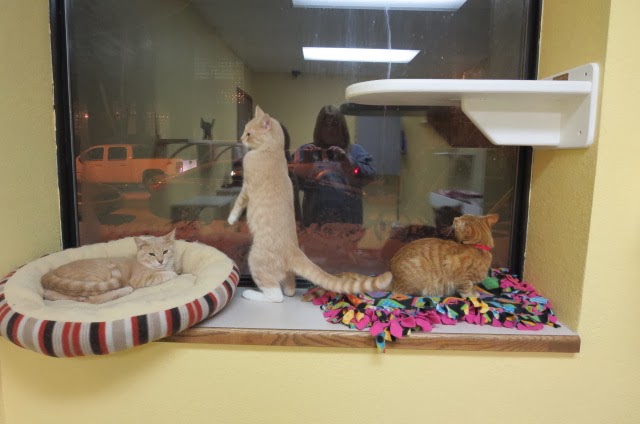
Okay, 'fess up.  Where does your cat sleep?  Nestled in the crook of your knees on your antique quilt?  On the larger part of your pillow where your head isn't?  On an easy chair close to the bed?  Or does she position herself flush against the closed door to your bedroom?  Or in her own bed in another part of the house?

Coach

A recent online survey revealed the following facts about cats in the household:
  • About 96 percent of cat owners allow their cats to sleep in the bedroom.
  • Almost 50 percent of those cats are allowed to sleep in the bed.
  • And 38 percent of those sleep on the pillow with the owner.

It should be noted, too, that younger cats prefer the pillow, while older cats prefer to sleep at the foot of the bed.

Lambert
Although the amount of time spent sleeping varies from cat to cat, and depends on age and personality, felines spend an average of 13 to 16 hours each day curled up in slumber.  And when it comes to sleep, your cat likes warm and cozy.  She looks for a place that feels comfortable and safe and has the right temperature.  When the weather is warm, she seeks high shaded sleeping nooks, where she can stretch out.  During the cool winter months she'll find a place in the warm sunshine or near a heat source, and there she'll curl up with face between paws to reduce body heat loss.

Lorelei
If your cat does sleep in bed with you, consider the following:
  • Cats rarely sleep through the night and they often wake up too, too early for most people, usually 4 or 5 am.  At this point they want to be fed and they may also want to play.
  • Cats are fascinated with anything that moves, and if the nearest thing is your hand or foot, you may have a painful awakening.
  • Although cats are known to be fastidious about cleanliness, they still step in and out of the litter box.
  • You might have allergies and may need to have time away from your kitty, especially when sleeping.

Phantom
Most behavioral problems can be handled, however, and training is always worth the effort.  Your cat can learn to stay quiet when she awakens or she can leave the room by herself.  A firm "no" a few times may stop the batting game with your foot – a few hundred times may get her to stop all together.  And you can help keep her paws clean if that is an issue or provide a towel or blanket on top of the antique quilt. 

Rooney
Source: www.petplace.com

Saturday, March 29, 2014

Friday, March 7, 2014

Fun Facts About Cats - Answers

1. Cats are more popular than dogs in the U.S.
          a. True -

Sorry, dogs.  Cats rule, but not by much.  There are about 74 million pet cats in the U.S. and 70 million pet dogs.  Cats live about 14 to 16 years, so plan on taking care of them for a long time.  Having a cat may be good for your health.  One study found people who have cats are 40% less likely to have deadly heart problems than people without cats.


2. Cats can be right-pawed or left-pawed.
          a. True -

Just like people, cats can be lefties or righties.  Researchers watched cats reach for food.  Of more than 100 cats, about half reached with their right paw.  About 40% used their left, and 10% used both their right and their left.


3. Cats talk to each other by meowing.
          b. False -

Cats don't chat when they meow.  But purring, hissing, and shrieking may be part of how they get messages across.  They also use body language and mark things with their scent.  They mark things by rubbing them with their tail or face or by spraying them.  They even scratch wood sometimes to show they were there!


4. Chocolate is a special treat for cats.
          b. False -

Just like chocolate is really bad for dogs, it also can be toxic for cats.  Too much of it can raise your cat's heart rate and blood pressure and cause seizures.  Stick with kitty food treats instead.


5. Cats can usually squeeze their bodies through any space their head fits.
          a. True -

A cat's collarbones are free-floating, so their heads are usually the widest part of their bodies.  If your cat's head can fit through a tight space, generally, the rest of his body can follow.  Cats also have loose skin, which gives them even more flexibility.


6. A cat’s whiskers are about as long as her body is wide.
          a. True -

Whiskers are much thicker than normal hairs and are surrounded by nerves that help sense nearby objects.  Whiskers also may show your cat's mood.  They point forward when she's feeling friendly.  They lie flan on her face when she's feeling threatened or aggressive.


7. How high ca most cats jump?
          c. About 5 feet -

Cats in their prime usually can jump about 5 feet off the ground.  But, like people, they lose a bit of their spring as they get older.  When arthritis sets in 75% of cats simply won't jump.  Most of those who still spring up can't jump as high.  Medicine, supplements, and losing weight can ease your kitty's arthritis pain.


8. All kittens are born with brown eyes.
          b. False -

All kittens are bone with blue eyes, and their eyelids stay closed until they 10 to 14 days old.  They usually get their true eye color by eight weeks.


9. Cats have a third eyelid.
          a. True -

The third eyelid is the pink tissue at the inner corner of a cat's eye.  It helps protect the eye and spread tears over it.  These extra eyelids usually stay hidden unless a cat is sleepy.  Sometimes you see them in sick cats.


10. How much of his life has a 15-year-old cat slept through?
          b. 8 to 10 years -

They don't call them cat naps for nothing.  Cats sleep whenever they can, adding up to about 12 to 16 hours a day.  Like people, cats probably have three different phases: awake, rapid eye movement (REM) sleep, and non-REM sleep.  It's normal to see your cat's face and leg muscles twitch when he sleeps.  It's called "dream chasing".


11. Cats don’t sweat.
          b. False -

Cats sweat, but not a lot.  They have fewer sweat glands than people and sweat much less.  The little they do sweat is often masked by their thick fur, although you may notice sweaty paw prints.  They stay cool by grooming themselves.  When they lick their hair, the saliva evaporates from their skin and cools them off.


12. A female cat can have kittens only once a year.
          b. False -

Cats are pregnant for only about nine weeks, and they can get pregnant again just a few weeks after weaning their kittens.  If you don't spay your cat, she could have many litters in a year.  This is really true in mild climates.  Cats need at least 10 hours of light a day to be fertile.


Source: pets.webmd.com

Thursday, March 6, 2014

Featured Volunteer - Elodee

I read about Cat’s Cradle Shelter while cruising Facebook.   We visited on a Saturday in November of 2013 and began cleaning room one the following Tuesday.  As I have told others, I have been a volunteer for humans from 0-98; it was time to try cats which are a new and welcome experience.  


I am of the age where a camera was only for pictures of family gatherings, firsts, and babies bundled up.  The best pictures I have are images in my mind.  One is of a green-eye barn cat named Sapphire, which makes no sense because sapphires are blue.  J.  It was after supper and mother and I were doing dishes.  Sapphire jumped up on the dog house which was below the kitchen window and meowed.  All you could see in the darkness were her green eyes, her pink tongue, and the frost on her whiskers.  It was her way of signaling she wanted to come in to eat.
This note would not be complete without mention of Max, a smoke tipped Persian I bought from a person using our durable medical service.  I brought him north with me from Kansas.  Although deceased for a few years now, we still hear him jumping off the bed in the north room.  Max was my ‘go to’ guy during my years as a single parent.  He kept many secrets.  RIP
My favorite cat moments at the shelter include Jedi, now adopted, who liked to sit on my back while I was scrubbing the floor.  If I stopped he would chew on my earrings.  The joke at home was, if he swallows the earring, we will have to adopt him!  There is something very special about sitting quietly and observing the colony.  It is a time of solitude shared with a variety of personalities.  It is touching for me to have them wait for lap time. 

My name is Elodee and it is an honor to be associated with this fine organization.  


Tuesday, March 4, 2014

Fun Facts About Cats - Quiz

How much do you know about cats?  Take the quiz below and check back on Friday for the answers.

1. Cats are more popular than dogs in the U.S.
          a. True
          b. False

2. Cats can be right-pawed or left-pawed.
          a. True
          b. False

3. Cats talk to each other by meowing.
          a. True
          b. False

4. Chocolate is a special treat for cats.
          a. True
          b. False

5. Cats can usually squeeze their bodies through any space their head fits.
          a. True
          b. False

6. A cat’s whiskers are about as long as her body is wide.
          a. True
          b. False

7. How high ca most cats jump?
          a. About 3 feet
          b. About 4 feet
          c. About 5 feet

8. All kittens are born with brown eyes.
          a. True
          b. False

9. Cats have a third eyelid.
          a. True
          b. False

10. How much of his life has a 15-year-old cat slept through?
          a. 6 to 8 years
          b. 8 to 10 years
          c. 10 to 12 years

11. Cats don’t sweat.
          a. True
          B. False

12. A female cat can have kittens only once a year.
          a. True
          b. False

Source: pets.webmd.com

Sunday, March 2, 2014

Colony Housing - Room 3

Colony housing for cats can provide a positive alternative to individual cat cages. Cats can roam free in a home like environment, have the opportunity for greater activity such as climbing, perching and window viewing as well as social interaction. 

Here are a few of the cats in colony room 3 at CCS.

Baby
Buddie
Cojack
Duke (left), Becker (right) & Ginny (bottom)
Edgar
Lorelei


Friday, February 28, 2014

Getting Kitty Used to a New Pet

Imagine you're at home when out of nowhere a stranger enters, makes himself at home on your couch, and informs you that he will be living with you from now on. That would make you incredibly uncomfortable, protective of your home, and probably even scared. 

Now you know how your cat might feel if you bring a new animal home. Of course this doesn't mean you should not get another pet - but there are things that you can do to help your cat cope with and feel more comfortable with your new pet.


Remember, when introducing a new pet into a household with a cat, you should always take things slowly. Don't just let the new animal roam the place freely, as this can make your cat feel threatened, which in turn can lead to a hostile reaction. Start slow and be patient. Try putting the two animals in the same room and watching them closely before attempting to release your new pet into your cat's territory.

It's a good idea to visit a veterinarian with the new animal before introducing him to your cat. You want to make sure that your new pet is healthy and will not be exposing your cat to anything that is possibly contagious.

Something you can do to help your cat deal with a new pet is to keep their items separate. Each pet should have its own water and food bowls, litter boxes (in the case of two cats), and anything else. It's also recommended that you give the two animals their own space in the house away from each other so that they can feel safe and secure in their own territory without feeling like their space is being invaded. Give your cat lots of love to make sure he knows that he is not being replaced and does not feel neglected.

You can also use a stress relief product like ComfortZone with Feliway to help your cat adjust to the new pet. ComfortZone works by releasing cat pheromones into the air, which make the cat feel secure and at home. ComfortZone can help reduce the cat's fear and stress, along with any associated negative behaviors. For a more in-depth explanation of why ComfortZone is such an effective way to reduce stress in cats, you can visit their "How it works" page.

When adding a new pet to your household, you want to ensure their safety but you also want your existing cat to feel comfortable and stress-free. Follow the few simple steps I've mentioned when introducing a new pet to your cat and your two pets will be playing together in no time! 

Source: petplace.com


Now that you have a few ideas on how to introduce a new pet, stop by CCS for their open house on Saturday, March 1.  Your new friend is waiting for you.  Here are a few of the cats that are available for adoption.

Versace
Dalton
McGee
Celeste
Lorelei
Bugs
Marissa


Friday, February 21, 2014

Open House - Saturday

CATS Cradle Shelter will be open from 12:00 - 5:00 on Saturday, February 22.  We are located at 9  9th Street South, Fargo.

Stop by and see all the cats that are looking to find their special family.  Your forever friend is waiting to meet you.  Here are just a few of the cats who are looking for their forever homes.

Lottie - rescued June 2012

Maren - rescued October 2012

Arial - rescued December 2013

Peterson - rescued November 2013

Violet - rescued December 2013


Buddie - rescued November 2013

Nevis - rescued January 2014

Mitzy - rescued December 2013

Molly - rescued December 2013

Marble - rescued March 2013

Aggie - rescued August 2013

Bishop - rescued March 2013

Tuesday, February 18, 2014

Is Your Cat Suffering from Anxiety?

Cats absolutely experience anxiety. It is the owner's responsibility to be in tune to the cat and pick up on changes that might indicate the cat is struggling with stress. Cats experience anxiety because of psychological, physical, and environmental struggles. Without intervention, the results of a cat's stress may have detrimental affects on your home, your family, and the cat's overall health.

Signs of Cat Anxiety

Every cat shows signs of anxiety in his own way. If you are noticing a change in your cat's behavior, it is important to evaluate the situation, put yourself in your cat's paws, and determine if something is bothering him. Some possible signs of anxiety are listed below:

·  Changes in appetite or weight
·  Changes in elimination habits (such as urinating outside of the litter box)
·  Health changes
·  Lethargy
·  Depression
·  New destructive behaviors (such as furniture scratching)
·  Trembling
·  Restlessness

If your cat is showing signs of stress and anxiety, it is extremely important to see your veterinarian to rule out medical problems. If your cat is physically healthy, your veterinarian will help you take the next step in treating his stress.

Parallels to Human Anxiety

As you know, being stressed and anxious is unpleasant. If you feel your cat is having a psychological struggle, relate it to your emotions and work hard to help your cat through his problem. As with human anxiety, without intervention your cat's immune system can become compromised, he may become severely depressed, and / or develop behavior problems. Eliminating the cause of the stress or helping your cat handle the situation is the key to relieving the anxiety.

Causes of Cat Anxiety

Determining the cause of your cat's anxiety can be a difficult task, as cats cannot communicate to us what is bothering them. Begin by evaluating your cat's daily life. Could any of the following be a problem for your cat?
·  Boredom
·  Lack of exercise / play
·  Fear (Loud noises, other cats, certain people or objects, etc.)
·  Inadequate nutrition
·  Health problem / pain
·  Inadequate living quarters
·  Changes to daily routine
·  Loss or addition of family member or cat

Prevention and Treatment

There are several things you can do to try to minimize stress and anxiety in your cat's life. Making your cat's well-being a priority is the first step to preventing anxiety. For example, turn your cat's mental wheels through toys and games. Grow some catnip or cat grass. Toss out a cat nip toy. Add a new scratching post. Try playing with your cat with a laser pointer. Exercise your cat's body through playtime. Offer emotional support by giving your cat your time and love. Nurture his body by providing a high-quality, nutritious cat food, fresh water, and the shelter of your home.

Treating anxiety in your cat can be a long, tedious process, but be persistent and you WILL help your cat find relief. Rule out medical causes of stress, eliminate other potential causes, enrich your cat's life with all the essentials, and explore PetPlace for articles on helping your cat handle the situations that make him anxious.

Like humans, some animals are naturally prone to stress and some have serious struggles with past traumas. These cats may need the assistance of a veterinary behaviorist) or anti-anxiety medications prescribed by a veterinarian.

The bottom line is that animals DO experience emotional stress, and it IS something to be taken seriously.


Source: www.petplace.com

Sunday, February 16, 2014

Winter Weather Affects Cats -- CCS Local News Story

CATS Cradle Shelter shares with Valley News Live how cold weather is affecting cats in our area.   Click on the link below for the news story that aired February 15, 2014.

http://www.valleynewslive.com/story/24735851/this-winter-has-been-brutal-on-us-and-cats-too#.UwA6YwjoYbw.facebook

Friday, February 14, 2014

Frostbite in Cats

Frostbite results from prolonged exposure to severe cold. Fortunately this doesn’t happen too often to the average house cat. Even though cats have a thick fur coat, the tips of the ears, nose, tail, and toes, or any area where the hair is thin is susceptible to frostbite. If your cat gets frostbite, she most likely also has hypothermia. Any area that suffers frostbite may be lost if not treated immediately.

What to Watch For 

Affected areas will be pale to bluish white in color and much cooler to the touch than surrounding skin. This is due to loss of circulation to the area, brought on by the cold. If the circulation returns, the affected area will be red and swollen, sometimes with a distinct line between the healthy and damaged areas. Usually the area does not become painful until the circulation returns.

Primary Cause 

Frostbite is caused by prolonged exposure to severe cold. This usually happens from being outside in cold weather for a long period without shelter.

Immediate Care 

  1. Warm the skin and stimulate the return of circulation to the affected area with warm (not hot), moist heat. This can be accomplished by immersing the area in warm water for 15 to 30 minutes, or applying a warm moist towel to the area.
  2. DO NOT rub the area as it will cause more damage.
  3. As the circulation returns, the skin will redden.
  4. Apply aloe vera to the skin.
  5. If any of the red areas start turning dark, it is a sign of severe tissue damage and your cat should be seen by a veterinarian immediately. 

Veterinary Care 

Diagnosis

Diagnosis is based on physical examination and your cat’s history of exposure to cold.

Treatment

Initial treatment is to warm the tissue and restore circulation as already described. If it appears that normal circulation is returning, your veterinarian may prescribe pain medication or antibiotics. If the circulation is not returning, as determined by the tissue turning dark in color instead of red, your vet may attempt additional measures to improve circulation. However, these areas are usually dead or dying tissue and will need to be surgically removed.

Living and Management 

It may take several days for evidence of dying tissue to become apparent, so inspect the affected areas at least once a day for darkening of the skin. As the areas of frostbite heal, they will probably become uncomfortable or itchy to your cat. It is important to keep your cat from licking, chewing, or scratching the area. The use of an Elizabethan collar may be necessary. If any tissue has been removed, your veterinarian may need to remove stitches after about 10 days. Otherwise, follow any additional instructions he or she may give you.

Prevention 

It is best to keep your cat inside when the weather is cold. If your cat’s habits are such that she may be outside in severe weather, make sure she has access to shelter that protects from wind and snow (or rain), and has straw or blankets to hold warmth.

Source: http://www.petmd.com/cat/emergency/common-emergencies/e_ct_frostbite

Coming in from the Cold (Helping feral cats survive the winter)

With a few odds and ends and a trip to the hardware store you can help feral cats find a safe place to survive the worst that winter can offer.

The weather report warns that a winter storm is moving into the New York area. Ten to 12 inches of snow are expected to fall by morning. Joan Scroggs leaves her home on Long Island and heads for the 12 feral cat colonies she has tended seven days a week, 52 weeks a year, for 14 years. At each colony, Scroggs inspects the handmade cat shelters to determine if the seams are sealed and the boxes are elevated adequately to keep cats high and dry. She angles a board in front of each shelter to protect the occupants from wind and blowing snow. Scroggs knows that once the storm hits, she must return to each shelter periodically during the night to dig out a path so the cats can come and go. Caring for feral cats involves much more than simply feeding them, which oftenr esults in cats congregating and breeding more than they might if individual cats roamed freely. Diehard soldiers such as Scroggs know that being a caregiver is a year- round responsibility that involves trapping, vaccinating and spaying or neutering the cats prior to releasing them again. But tending cat colonies is especially arduous when temperatures drop and the weather becomes harsh. Even though feral cats develop a thick coat in the fall to keep them warm, they can die from exposure if at least some protection from the elements is not available.

Shelter Do’s and Don’ts

With a little ingenuity, caretakers can provide the added warmth that these cats need by constructing a homemade shelter. A shelter may provide warmth for two, three or more cats, depending on its size and the sociability of the cats. Feral felines who compete for food at other times of the year may find they are willing to overlook their differences when temperatures drop. "There are no enemies in a snowstorm," says another veteran caregiver, Joanna Harkin, an attorney and director of Alliance for Stray Animals and People (ASAP), a nonprofit organization in Washington, D.C.

The reason for these newfound alliances is a practical one. "Cats give each other body warmth in the cold months," explains Louise Holton, president of Alley Cat Allies, another Washington, D.C.-based nonprofit organization dedicated to non lethal feral cat control. Holton has seen as many as 12 cats come out of one shelter during a blizzard.

Before constructing a shelter, be sure to obtain permission from the landowner on whose property it is to be placed. Alley Cat Allies recommends that a shelter be at least two feet by three feet long and 18 inches high. It should have an opening small enough to prevent dogs or other large animals from entering and a flap or L-shaped entryway to keep the cold air from blowing in. And bigger shelters are not necessarily better. The body heat generated by the cats huddling inside tends to disperse, leaving the interior of the shelter as cold as the weather outside. Ideally, the shelter should be small enough to transport in your vehicle to the colony site.

Shelters can be built of wood or other materials and need not be complex. Alley Cat Allies publishes a fact sheet with plans for building an insulated, wooden cat shelter (see "Feral Cat Resources"). The plans include materials needed and schematics for cutting the wood and insulation. Materials for one of their wooden shelters should run about $25-$30 at your local lumberyard. For about $25, Scroggs constructs boxes made of two-inch-thick home insulation boards. The boards come in large sheets at home supply stores. She seals the seams using a silicone gun to prevent cold air from entering. Scroggs then elevates the shelter on cinder blocks and places a flat piece of wood on top to weigh it down.

You can make an "instant" shelter from a cardboard box with a trash bag taped over it. Cardboard boxes from moving companies or ones in which computer equipment is packed make sturdy little dens and can be obtained for little or no cost. Tape a few boxes together to create a hallway. "One can be creative with cardboard," says Harkin.

Once the boxes are positioned, throw leaves over them so that they’ll remain out of sight. Another option is to use milk crates wired together and covered with plastic. For those who have no construction skills, doghouses that are winterized with plastic coverings or insulation make convenient cat shelters. Reduce the size of the original doorway, and install a flap on the opening to keep out cold air and wind.

A shelter should sit a few inches off the ground on bricks, blocks or pallets (wooden platforms used for unloading boxed goods) to keep it from becoming waterlogged. Shipping firms or hardware, farm or pet stores may be able to provide discarded pallets or offer advice on where to obtain them. "As long as the cats stay dry, they can survive any climate," says Holton. During snowstorms, dig out a pathway from the shelter so the cats can get in and out. Although some areas of the country have relatively mild winters, providing shelter to protect the cats from the elements is still important. At California Polytechnic State University in San Lius Obispo, members of the Cal Poly Feral Cat Program built 12 feral cat shelters out of dark green, 55-gallon trash cans, cutting a doorway out of the side of each. "We like these better than dog houses because we can conceal them in the shrubs," says Edie Griffin-Shaw, director of the program.

Alley Cat Allies recommends the use of hardwood shavings (no cedar or pine), straw or fake sheepskin as bedding in the shelter. "Never use towels, blankets or sheets because they retain moisture," says Holton. Scroggs places bed sheets made from cut Mylar,’ a space-age product that retains body heat, in her shelters. These sheets can be found in the home section of department stores and are easily cut to size.

Dinnertime!

To protect food and water from the elements, place them in a covered shelter that will also protect the cats as they eat or drink. A stand with a sloping roof, open on two sides and off the ground, may be all that is needed for several cats to eat together. The same kind of trash cans used for shelter at Cal Poly also serve as protection for food and water. The campus also uses three-sided, covered wooden boxes to house the food and protect the cats. "The boxes are open enough that the cats don’t feel trapped," says Griffin-Shaw. Providing fresh food and water at a consistent time each day is especially important during the winter. Feral cats soon learn when the food arrives and will be waiting, even if in hiding, for a fresh supply of rations. Scroggs visits her 12 colonies once a day at a set time. "The cats know when I’m coming, so they get some of the canned food before it freezes," says Scroggs. Having backup volunteers to care for the colony is important throughout the year, but takes on special significance during inclement weather, when getting to a site at a consistent time is so vital.

If you know your colony will eat right away, warm up the canned food prior to taking it to the site. Always leave dry food, because canned will freeze, advises Holton. To keep food dry and relatively warm, Scroggs carries it in insulated bags and sets it inside doggie houses that have flip-up roofs. Alley Cat Allies estimates that a caretaker will spend $700 to $750 per year for a colony of 10 cats. That includes a 20-pound bag of dry food and two cases of canned per month. Cats need extra calories in the winter to maintain their energy levels, so expect to provide the colony residents with extra rations, which will drive up the feeding costs. Scroggs negotiated a discount at the pet store where she buys the food to feed the nearly 80 cats she tends. Taking hot water to the feeding stations helps keep it drinkable for a while before it freezes. If you have a feeding station near an electrical outlet, electrically powered water bowls designed to keep the water above freezing are an option. In most colony locations, however, these are impractical.

Veterinary care even in the winter, trapping and sexually altering the colony residents is important. The birthing season can begin as early as February and may occur more frequently among cats who live closely together. Work with spay/neuter groups to obtain the necessary surgery at a reduced cost. A spay may cost anywhere from $65 to $120, depending on your geographic area and whether the female is in heat. A neuter runs between $25 and $50. Going through a spay/neuter organization may reduce the cost by as much as half. Ask the veterinarian to notch a cat’s ear when it is neutered or spayed so that it will be easier to visually determine which cats have had the surgery. Cats who are spayed or neutered, provided with shelter, fed on a consistent basis and vaccinated usually become hardy enough to survive the cold winters, although older cats may have difficulty. Establishing a relationship with a veterinarian who is accustomed to caring for the colony becomes crucial to its continued health and well-being during the colder months.

Degrees of Wildness

The word "feral" comes from the feminine form of the Latin ferus, which means wild animal and refers to animals that have, according to Webster’s, "escaped from domestication and become wild." Cats are only one species that may have feral counterparts. Pigs, horses, pigeons and burros are other groups whose members may revert to their wild ways once they leave their domestic settings. A feral cat is not the same as a stray. "Stray cats have previously lived inhuman homes," says Louise Holton, president of Alley Cat Allies. When forced to live on their own, strays develop their wild instincts. Their social skills, however, are still close to the surface, and once trapped, they can be re-socialized. After the age of two months, feral cats are difficult if not impossible to tame. "A kitten born to a feral mother is pretty wild," says Holton. The older the generation, the more wild they become, so that a tenth generation feral is more difficult to socialize than a first or second generation feral.


Often, a feral will hook up with a tame domestic cat and mimic the cat’s social behavior. Such copycats are more easily approached and may be easier to tame. "If a prospective owner wants to work with a feral cat, he or she must have patience and move at the cat’s pace," advises Holton. Alley Cat Allies estimates there are more than one hundred million feral cats roaming the United States. The result of abandonment or the offspring of unaltered free-roaming domestic cats, feral cats congregate around food sources near restaurants, on college campuses and military bases, at prisons and around shopping malls. "Anywhere there is trash from a cafeteria and rodents, there are cats," says Holton.

Source: http://www.petfinder.com/journal/index.cgi?printer=1&article=472

Winter Shelter for Feral Cats

This is a shelter idea inspired by the CSM Stray Foundation in Kew Gardens, Queens:

Materials needed are: a large Rubbermaid storage bin, an eight foot by two foot sheet of one-inch thick hard Styrofoam, a yardstick, a box cutter or utility knife, and straw, shredded newspaper or other insulating material. Then assemble as follows:
  1. Cut a doorway six inches by six inches in one of the long sides of the storage bin towards the corner. To prevent flooding, cut the opening so that the bottom of the doorway is several inches above the ground.
  2. Line the floor of the bin with a piece of Styrofoam, using the yardstick and box cutter to cut out the piece.
  3. In similar fashion, line each of the four interior walls of the bin with a piece of the Styrofoam.  Perfect cuts are not necessary. Don't make the Styrofoam go all the way up to the top of the bin, but leave a uniform gap of at least three inches between the top of these Styrofoam "wall pieces" and the upper lip of the bin. There needs to be room for an interior Styrofoam "roof" to fit.
  4. Cut out a doorway in the Styrofoam where it is lined up with the doorway that has been cut out already in the storage bin. Trace the outline of the doorway on the Styrofoam first before cutting.
  5. Stuff the bottom of the bin with straw or other insulating material to hold the Styrofoam interior wall pieces in place.
  6. Cut out a Styrofoam "roof" to rest on top of the Styrofoam interior wall pieces
  7. Cover the bin with its lid.
This shelter can be cleaned by taking off the lid and the Styrofoam roof. It's also lightweight and may need to be weighed down. A flap over the doorway is optional. Catnip can be sprinkled inside at first to attract the cats.

Source: http://www.neighborhoodcats.org/HOW_TO_FERAL_CAT_WINTER_SHELTER

Friday, February 7, 2014

Fundraiser: Rock the Cradle -- with Laughter

The time is coming soon for our annual event at the Garage Bar in Moorhead. A couple of things have changed this year. We are changing it up a little and entertaining you with
3 comedians.

This will be our 3rd Annual "Rock the Cradle" with LAUGHTER fundraiser and silent auction. Due to the availability of the comedians who are not from our area, we will be having it on Thursday February 27th. I want to thank James from "Raise the Woof" who generously donates 100% of the ticket proceeds to CATS Cradle Shelter, and every other animal rescue event they do. We will be selling tickets starting today. They are available at the shelter.

Please call 701-356-7877 if you would like to reserve yours today.